
Best Rockhounding Spots in Ohio
Free rockhounding locations, pay-to-dig mines, permit rules, and community field notes for Ohio
Top Minerals Found in Ohio
- 💎Flint (Ohio flint - state gem)
- 💎Calcite
- 💎Fossils (trilobites, brachiopods)
- 💎Celestite
- 💎Sphalerite
- 💎Galena
- 💎Dolomite
Best Regions to Explore
Best Season to Visit
Ohio's weather is unpredictable; spring and fall offer the most comfortable field conditions.
Expert Collecting Tips
Flint Ridge State Memorial is a National Historic Landmark where Native Americans quarried chert/flint for thousands of years. The celestite deposits near Put-in-Bay on Lake Erie are world-class.
⭐ Ohio Rockhounding Highlight
Ohio flint — the state gem — is a colorful chert used by Indigenous peoples for tools and is still found in abundance at Flint Ridge.
Pay-To-Dig Mines in Ohio
Fee-based mining experiences where you keep what you find.
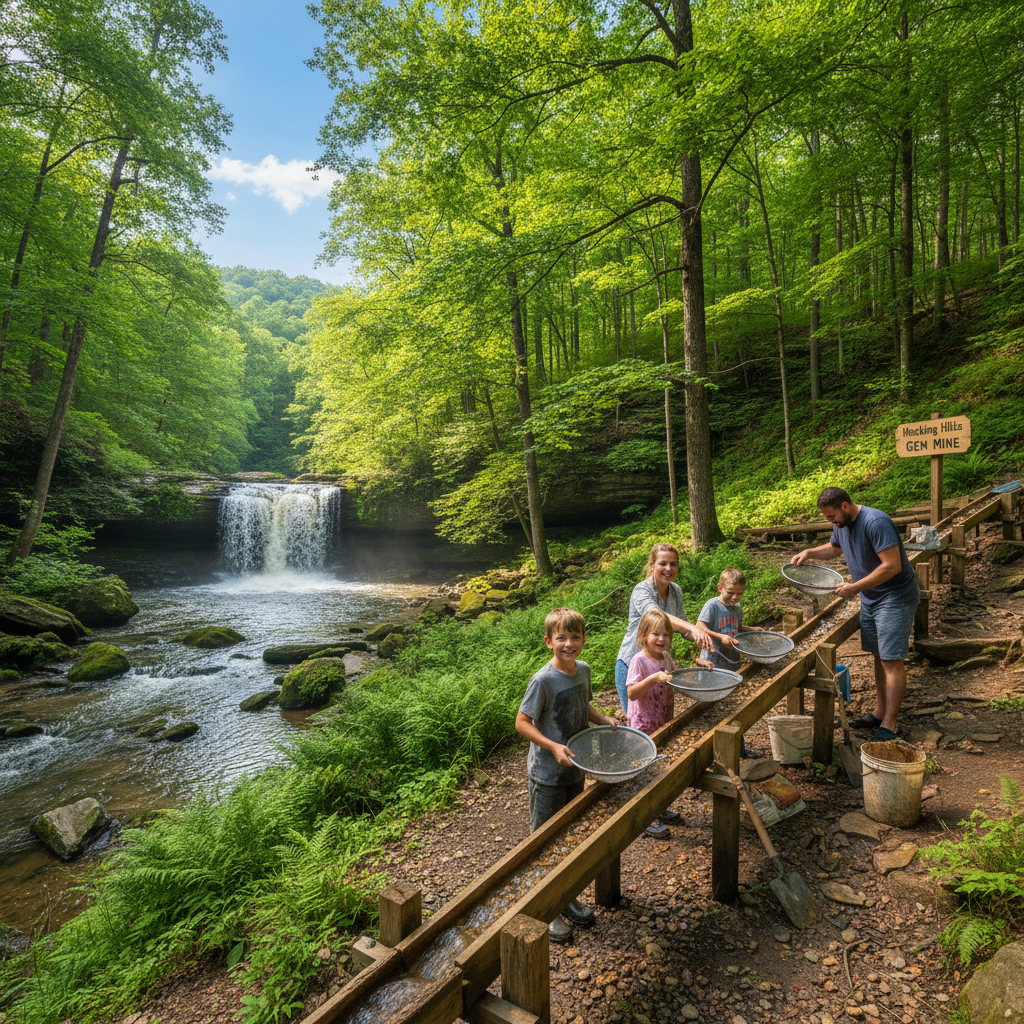
Hocking Hills Gem Mine & Gold Rush
Logan, Ohio
💰 $10–$40 per mining bucket
Nestled inside the scenic Hocking Hills KOA Holiday campground, this family-friendly gem mine lets visitors pan for Alaskan gold or sluice through gemstone-filled mining rough. Choose your bucket, grab your screen, and start sifting through gravel loaded with real gems and minerals. Staff are on hand to help identify every find. The location inside Hocking Hills makes it a great add-on to a weekend camping trip. A rock shop on site sells additional specimens and finished jewelry.
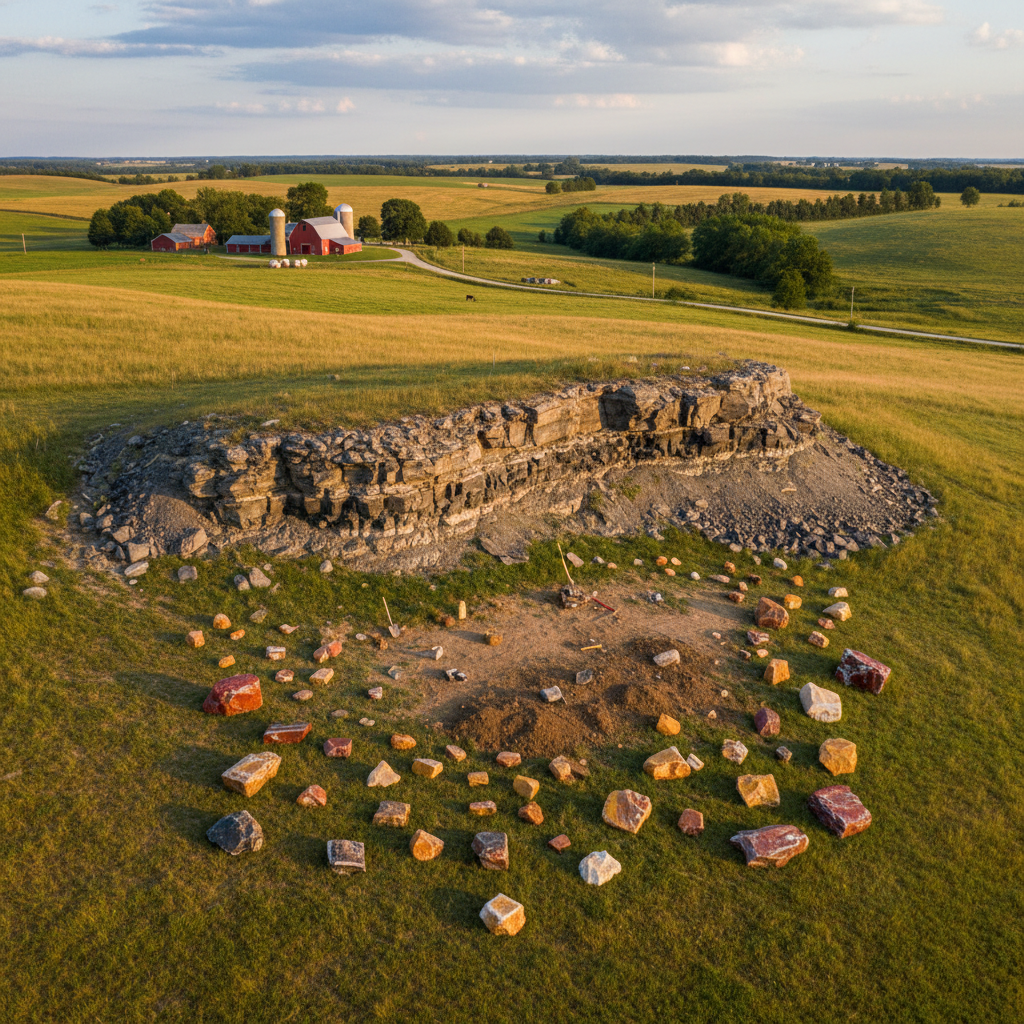
Nethers Flint Farm
Hopewell, Ohio
💰 $10/person entry + $1/lb of flint taken home
One of Ohio's most beloved pay-to-dig spots, Nethers Farm sits directly on the famous Flint Ridge — the ancient Native American quarry site that gave Ohio its official state gemstone. Visitors can dig through exposed outcrops and hillside soil to uncover stunning multicolored Ohio flint in shades of red, pink, yellow, purple, and brown. The flint here polishes beautifully and is prized by lapidary artists worldwide. Just show up, sign in at the farmhouse, and start digging. No reservations needed.
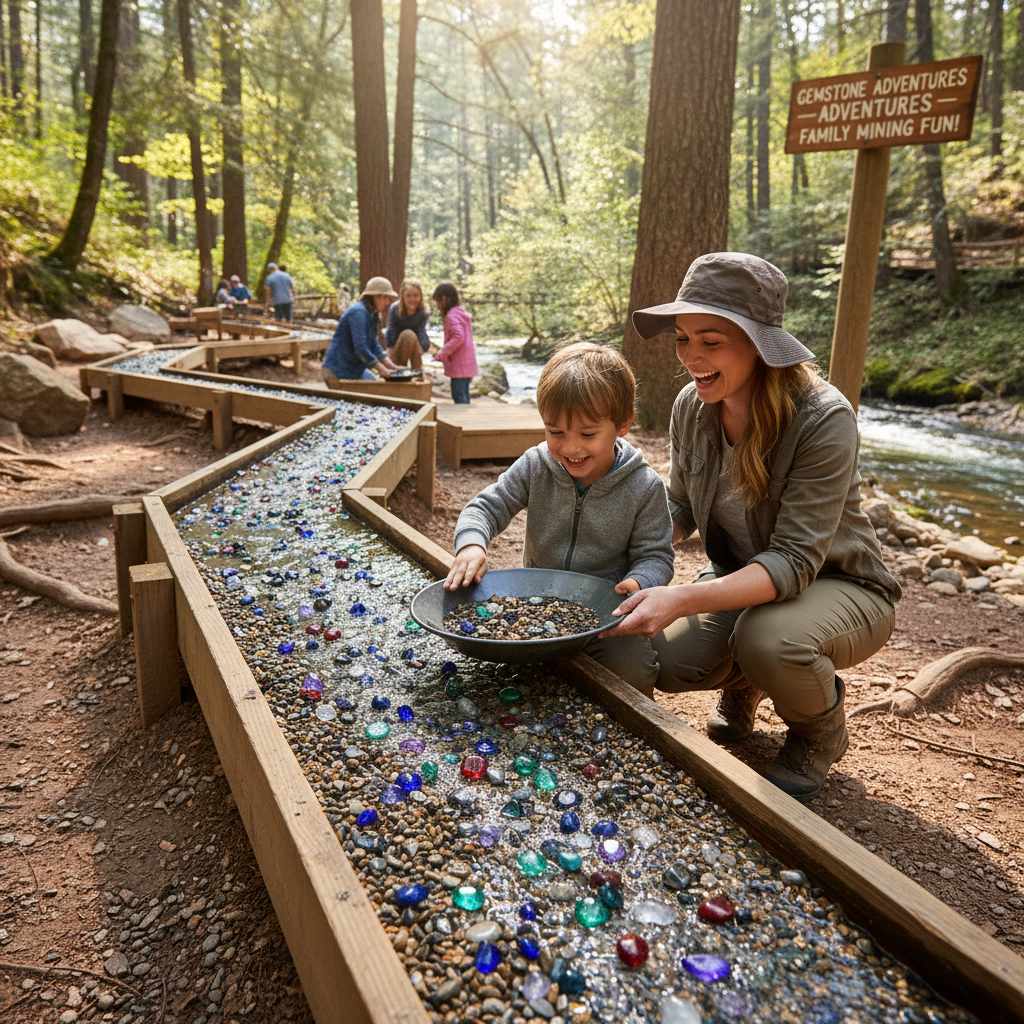
Ohio Caverns Gem Mining Sluice
West Liberty, Ohio
💰 $7–$50 per mining rough bag (equipment included)
Located at one of Ohio's most stunning natural attractions, Ohio Caverns offers a year-round gem mining sluice experience perfect for families and rock enthusiasts of all ages. Purchase bags of pre-seeded mining rough ranging from 3 to 20 lbs, then sluice through it at the outdoor (or indoor winter) flume to discover gemstones, minerals, fossils, and arrowheads. Some bags even contain emeralds! Staff help you identify your finds, and all equipment is provided. The caverns themselves are worth the visit too — featuring America's most colorful natural cave formations.
Free Rockhounding Locations in Ohio
Public and permitted sites where you can hunt for gems and minerals.
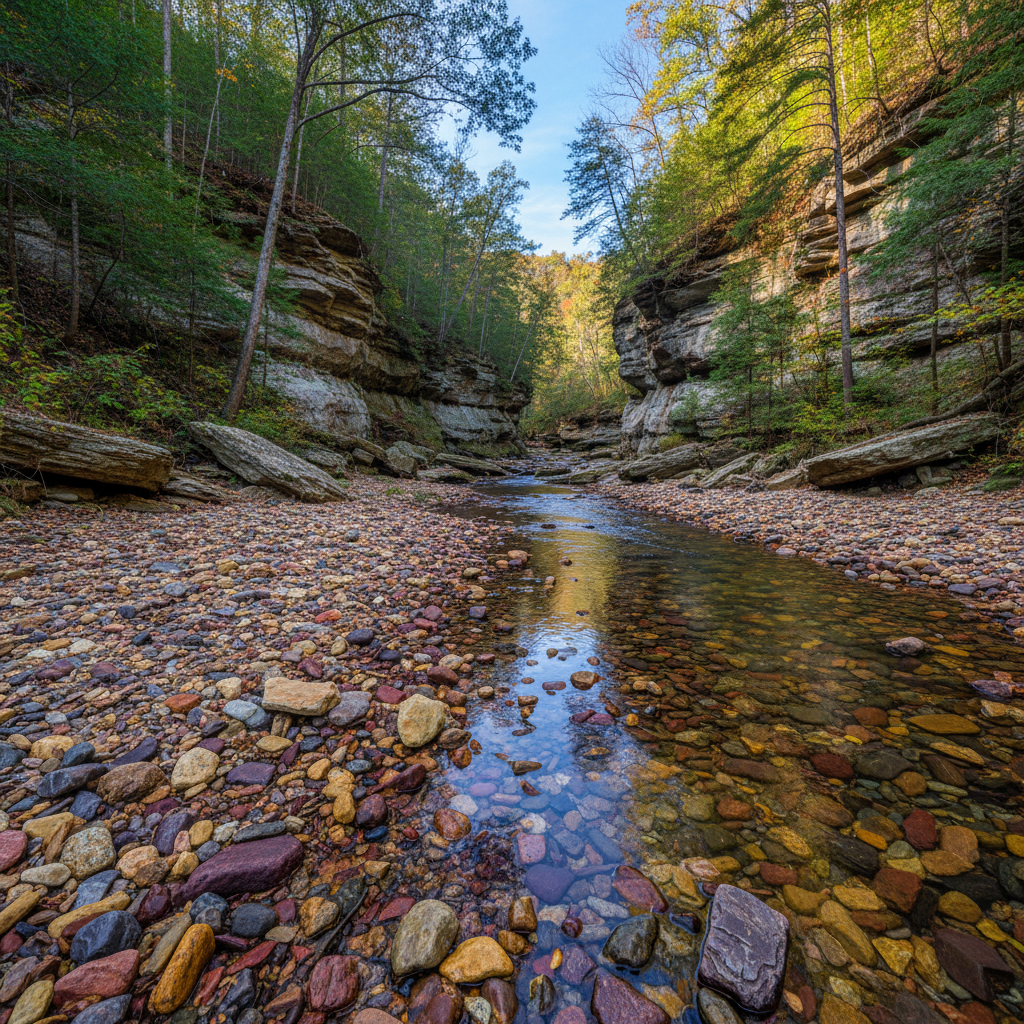
Clear Creek Metro Park
Rockbridge, Ohio
Clear Creek Metro Park in the Hocking Hills region is a stunning natural area known among rockhounds for surface collecting of Ohio flint, fossil-bearing limestone, and chert along the creek beds and exposed rock faces. The park protects one of the most ecologically diverse areas in Ohio, with sandstone cliffs, hemlock gorges, and rocky creek beds rich with geological history. Surface collecting of loose material in the creek is generally tolerated — always check current park rules. A beautiful destination that doubles as a world-class nature hike.
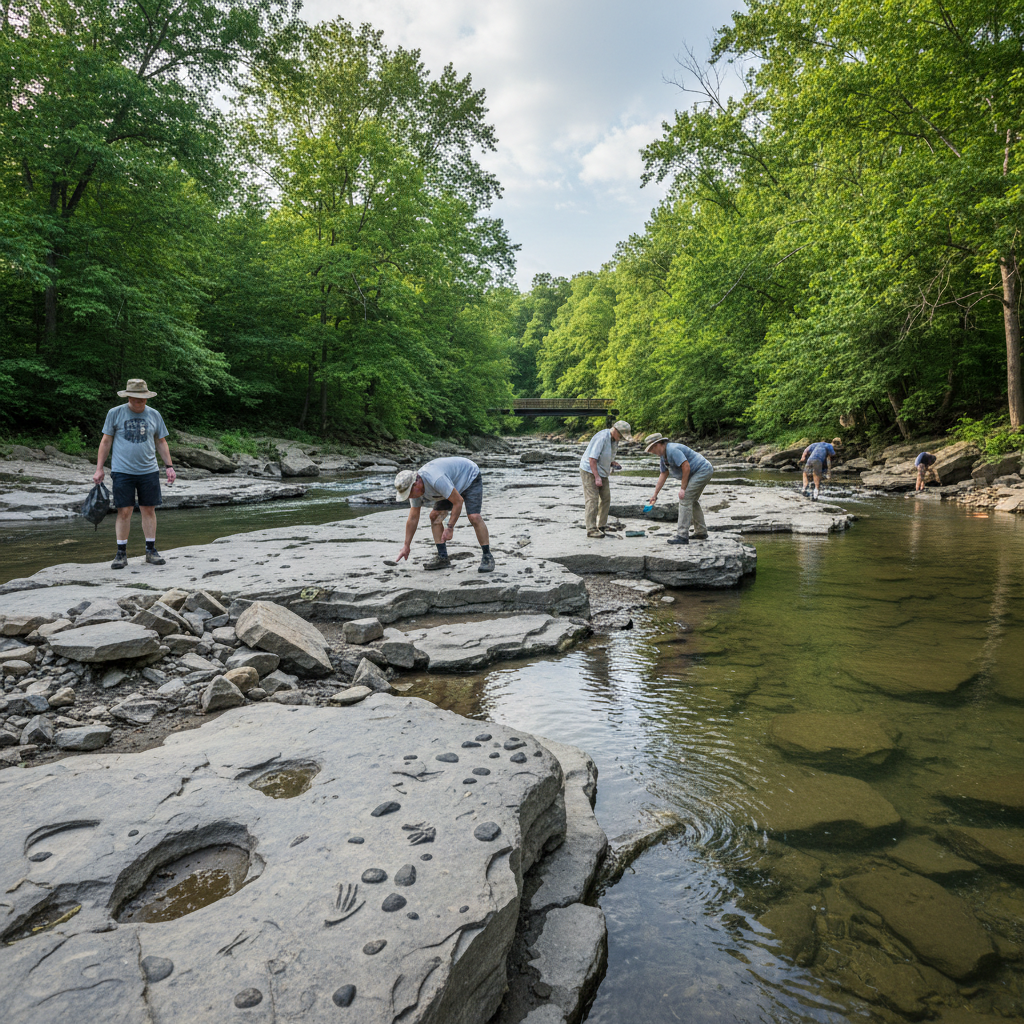
Englewood Metropark — Fossil Collecting Area
Dayton, Ohio
Englewood Metropark near Dayton features a designated, officially permitted fossil collecting area along the banks of the Stillwater River. The exposed Silurian and Devonian-age limestone and shale beds yield brachiopods, crinoids, horn corals, and bryozoans. Collecting is only permitted in the marked area — follow the posted rules at the site. Easy walking trails lead to the riverbank. Free to visit as part of the Five Rivers MetroParks system. A fantastic and accessible family-friendly spot just northwest of Dayton.
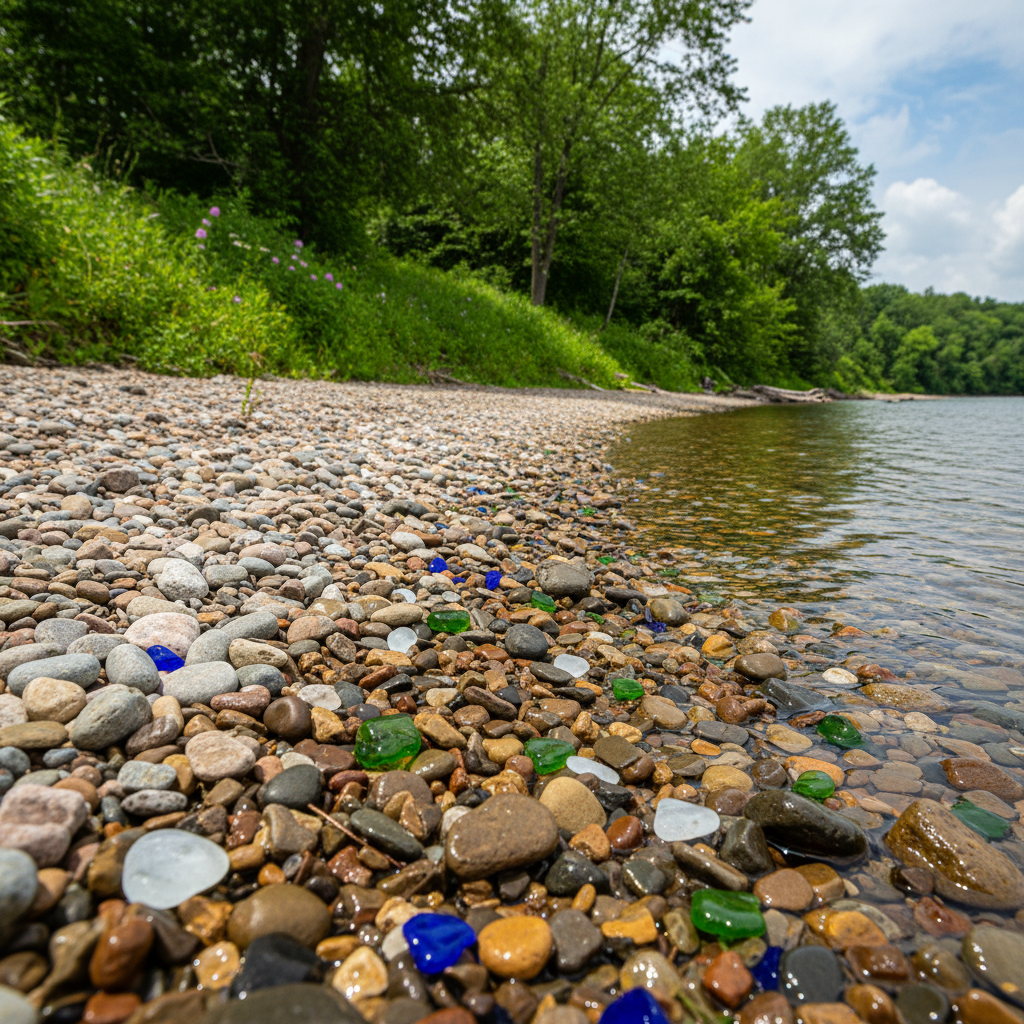
Conneaut Creek — Lake Erie Tributary
Conneaut, Ohio
Conneaut Creek in Ashtabula County is one of northeastern Ohio's best-kept rockhounding secrets. The creek runs clear over gravel bars loaded with smooth colorful pebbles, Lake Erie beach glass, fossil-bearing limestone cobbles, Ohio flint, and occasional agates. The lower stretch near Lake Erie is especially productive after spring floods deposit fresh material. Public access points exist along the creek. Best visited in late summer when water levels are lower and gravel bars are exposed. Combine with a beach glass hunt along the nearby Lake Erie shoreline.
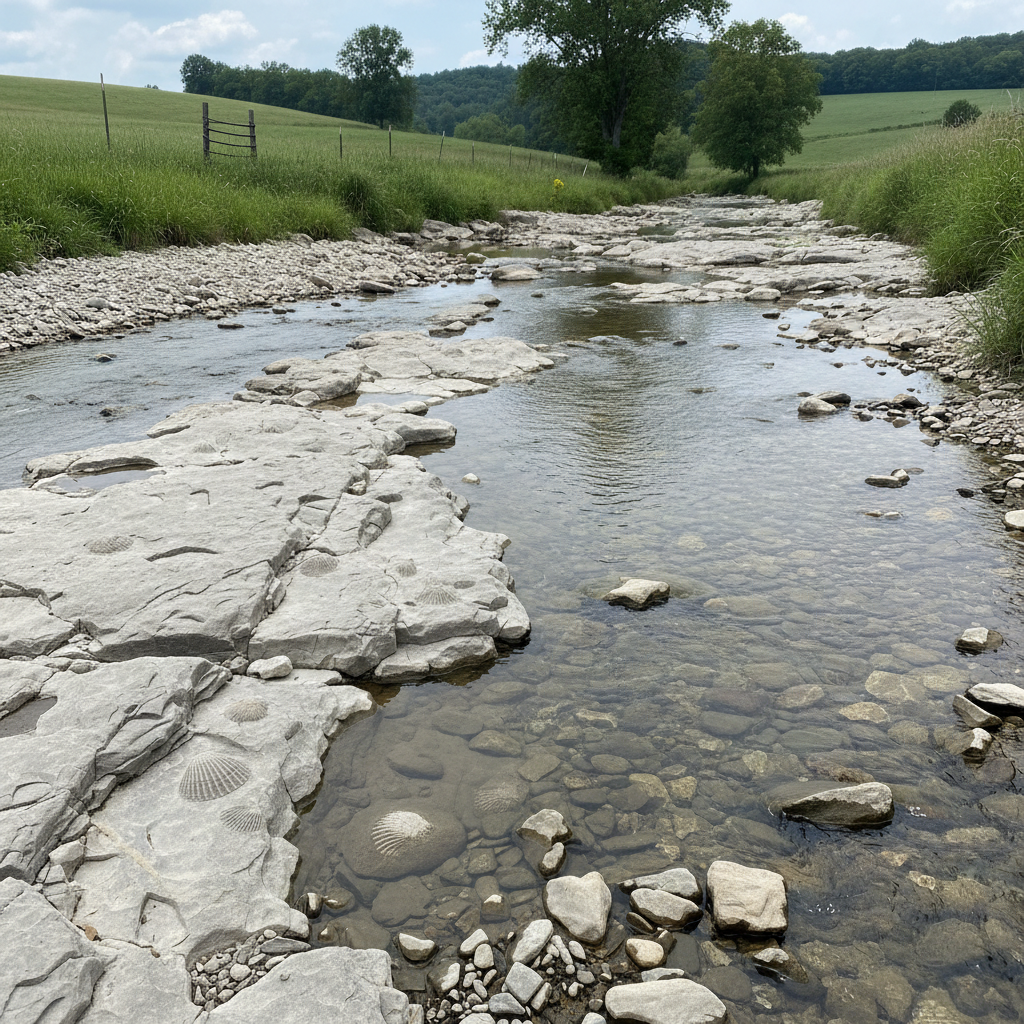
Paint Creek — Highland County
Hillsboro, Ohio
Paint Creek in Highland County flows over exposed Silurian and Ordovician limestone formations packed with marine fossils. Rocky creek gravel bars and cut banks reveal brachiopods, crinoids, horn coral, and other invertebrate fossils that wash out naturally from the bedrock. Several public access points exist along Paint Creek State Park and the surrounding area. Shallow wading and gravel bar walking is the primary collecting method. Spring and fall are ideal when water is lower. This area also sees occasional pieces of Ohio flint and chert in the gravel mix.
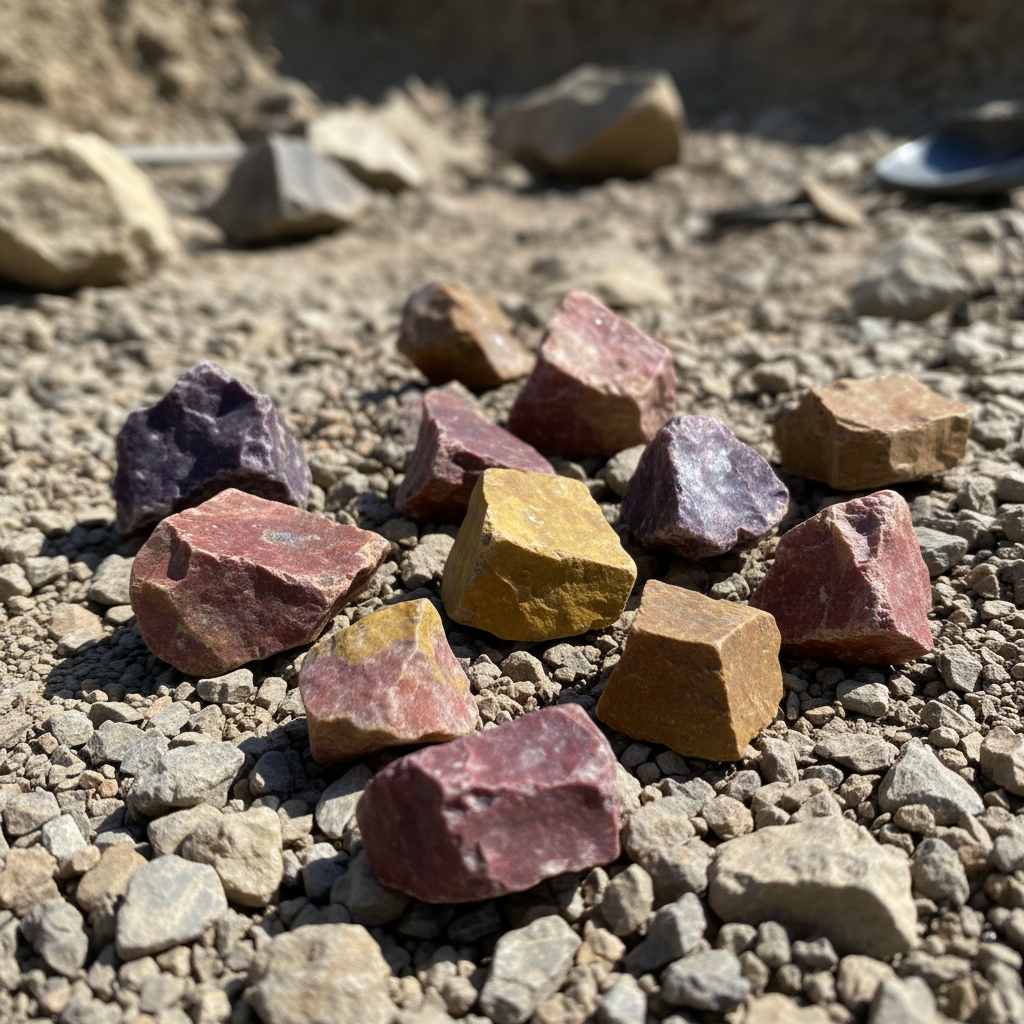
Flint Ridge Ancient Quarries & Nature Preserve
Glenford, Ohio
Flint Ridge is a National Natural Landmark and the site of one of the most important prehistoric quarries in North America. Native Americans traveled from across the continent to quarry the brilliantly colored flint found here — it is Ohio's official state gemstone. The preserve features a museum, nature trails through ancient quarry pits, and beautiful flint outcrops. While collecting is not permitted on the state memorial grounds, the adjacent Nethers Farm (a short drive away) allows paid digging. The museum and trails are a must-visit for any rockhound in Ohio.
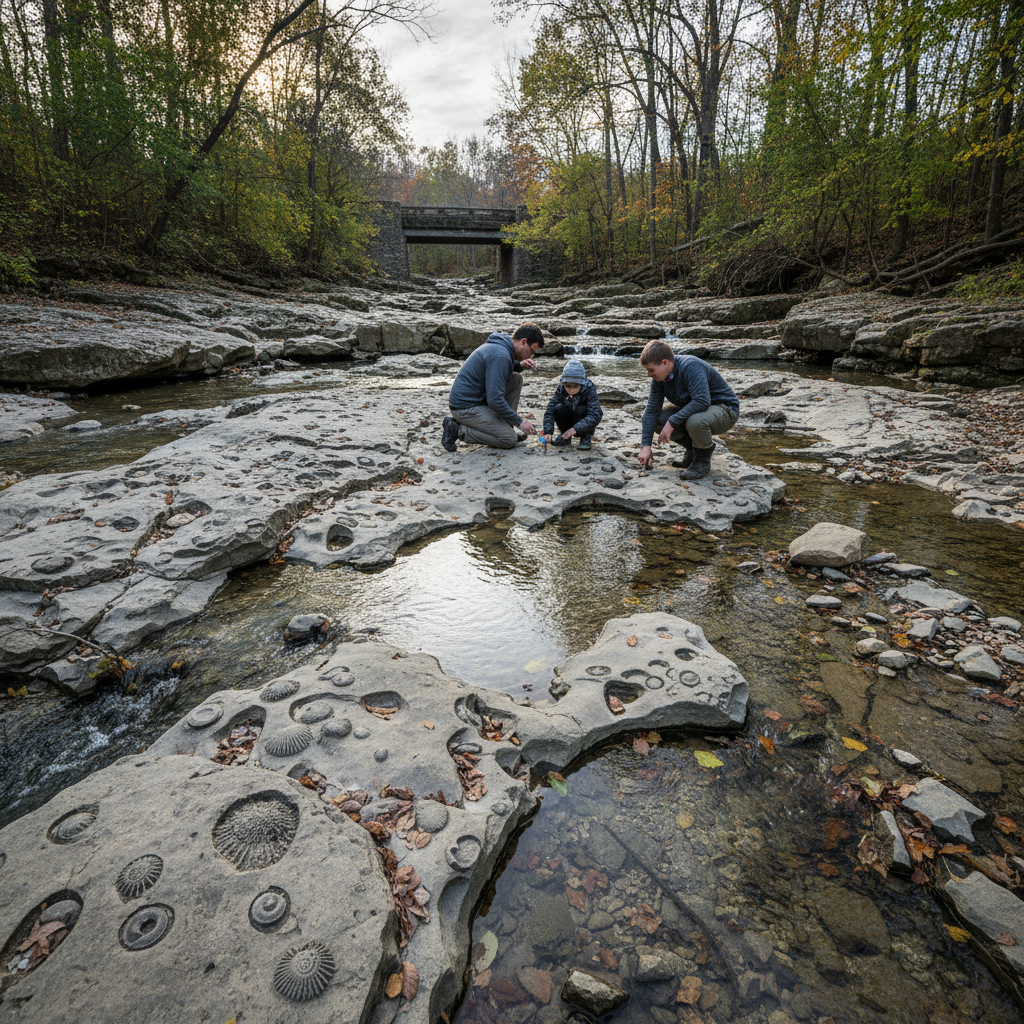
Caesar Creek State Park Fossil Area
Waynesville, Ohio
One of the premier free fossil-collecting sites in the entire Midwest, Caesar Creek State Park allows visitors to collect fossils at the lake spillway with a free permit from the visitor center. The exposed Ordovician limestone here is packed with 450-million-year-old marine fossils including brachiopods, crinoids, bryozoans, trilobites, and horn corals. The spillway area offers easy access for all ages. Pick up your free permit at the visitor center before heading to the dig area. A true bucket-list spot for Midwest fossil hunters.
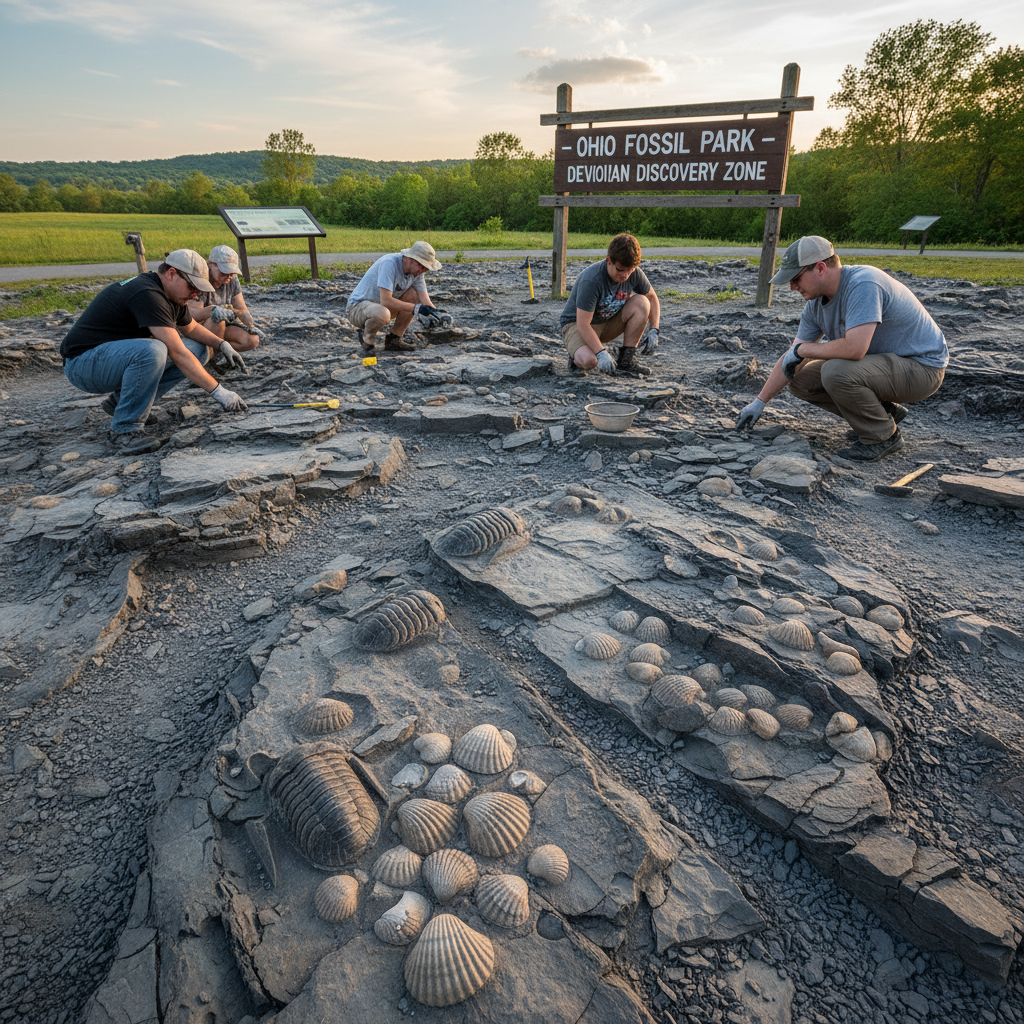
Trammel Fossil Park
Sharonville, Ohio
One of the only parks in Ohio — and one of very few in the entire USA — where visitors can dig for 440-million-year-old Ordovician fossils completely free and keep everything they find. No permit needed. The park sits on an ancient sea bed and is filled with brachiopods, trilobites, crinoids, and other marine invertebrates frozen in time. Bring your own tools (a hammer and chisel work great), dig in the exposed shale and limestone, and take home your finds. An incredible hidden gem near Cincinnati.
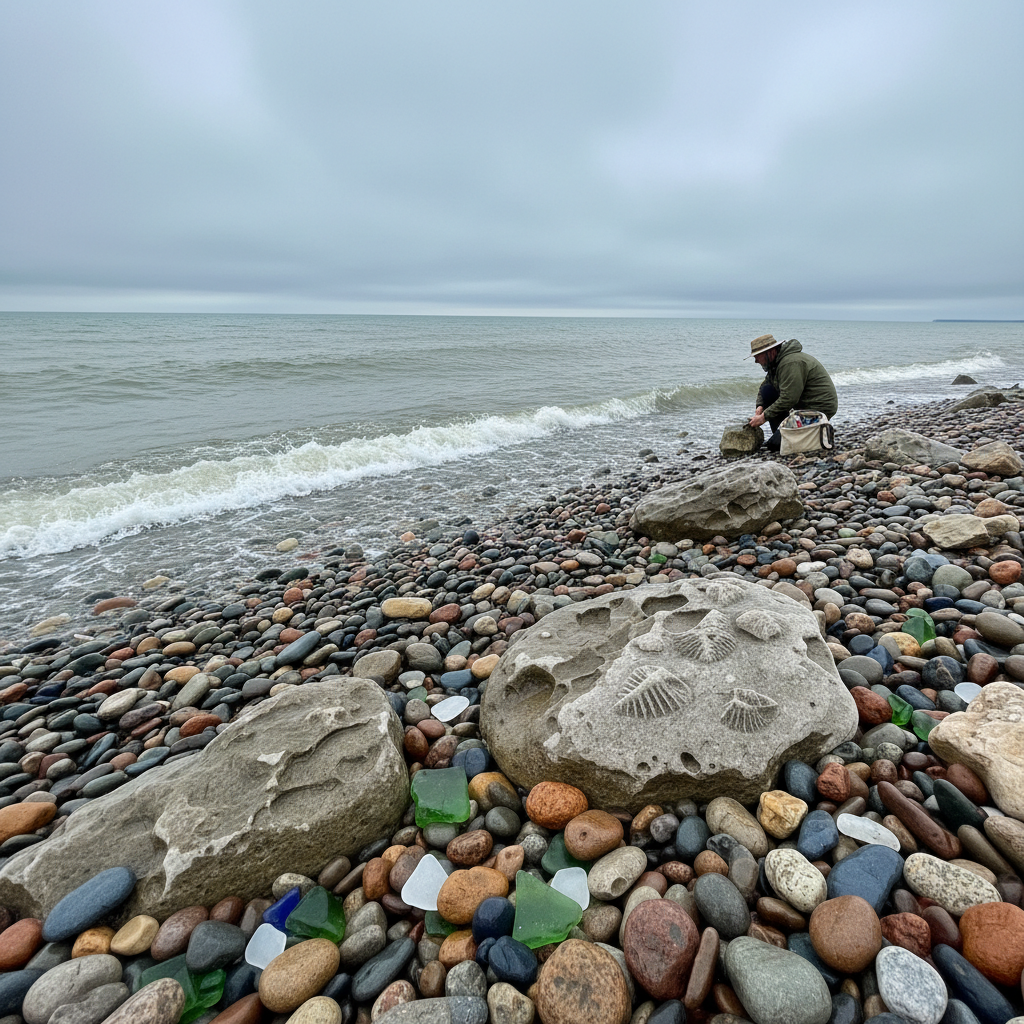
Lake Erie Shoreline — Lorain & Avon Lake
Lorain, Ohio
The Lake Erie shoreline east and west of Cleveland offers excellent surface rockhounding along public beaches and breakwaters. Rockhounds commonly find smoothed specimens of Ohio flint, petrified wood, fossil-bearing limestone, agates, banded chert, and occasional Lake Erie beach glass. The beaches at Avon Lake and Lorain county parks are particularly productive. Low water years expose additional rocky shoreline. Best collecting is after storms when waves wash fresh material ashore. Check local county park rules — most allow casual surface collecting.
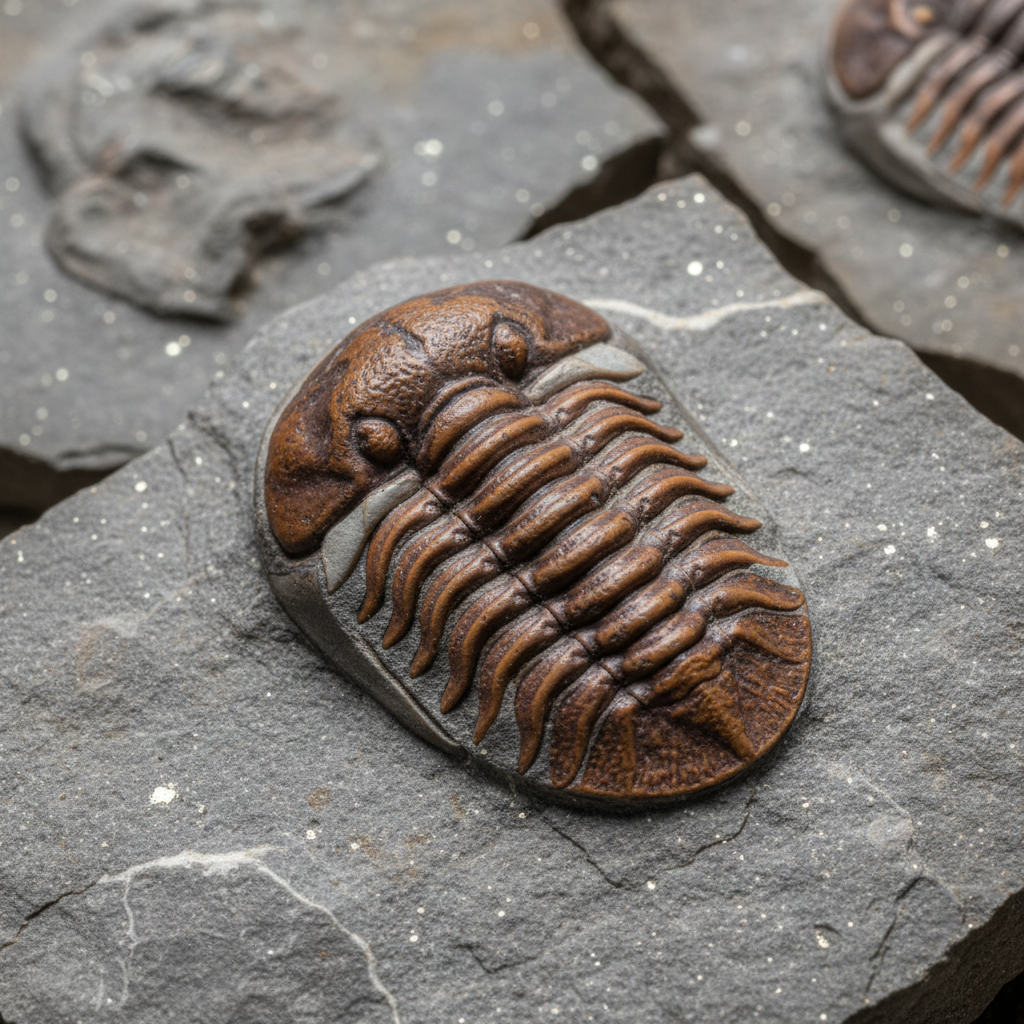
Fossil Park — Sylvania
Sylvania, Ohio
Fossil Park in Sylvania is world-renowned among paleontologists as one of the best Devonian fossil sites in North America. The park sits on an ancient reef system from the Devonian period (approximately 375 million years ago) and contains some of the finest trilobite specimens ever found. Visitors can dig freely through the shale and limestone beds to find trilobites, corals, brachiopods, horn corals, and more. The park is open seasonally (mid-April through October) and is completely free. Online reservations are recommended during peak season.
Olentangy Indian Mounds — Delaware County Creek Beds
Delaware, Ohio
The creek beds and gravel bars along the Olentangy River in Delaware County offer excellent surface rockhounding for Ohio flint, quartz, and various glacially transported minerals. Native Americans used this area extensively due to the high quality flint found in the river gravels. The exposed creek banks after rain events reveal fresh material. Surface collecting is permitted in many county parks along the river. Look for colorful pieces of flint, quartz crystals, and occasional fossil fragments in the gravel bars.

Crystal Cave — Put-in-Bay
Put-in-Bay, Ohio
Crystal Cave at Heineman's Winery on South Bass Island is home to the largest known geode on Earth. Discovered in 1897 during well-digging, the cave is 40 feet underground and its walls are entirely lined with enormous celestite (strontianite) crystals up to 18 inches long and 3 feet wide, colored in shades of blue, gray and white. The cave maintains a constant 54°F year-round. Tours are offered through the winery and include a wine or juice tasting. Accessible only by ferry to South Bass Island (Lake Erie). A jaw-dropping geological wonder and bucket-list rockhound destination.
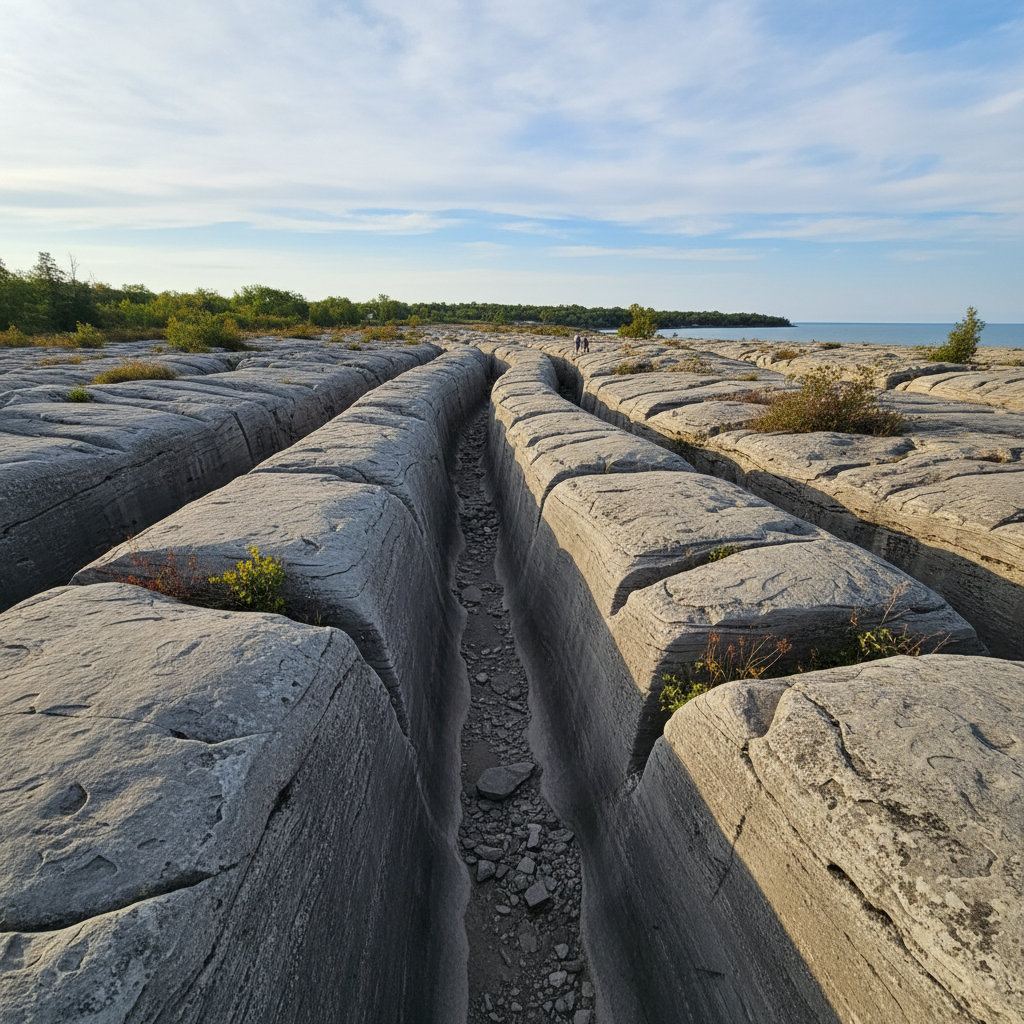
Kelleys Island Glacial Grooves State Memorial
Kelleys Island, Ohio
Kelleys Island features the largest and most accessible glacial grooves in the world — massive parallel channels carved into limestone bedrock by glaciers 18,000 years ago. While collecting is not permitted at the memorial itself, the island's limestone outcrops and surrounding Lake Erie shoreline are rich with Devonian fossils (brachiopods, corals, trilobites). Accessible by ferry from Marblehead, the island is a rockhounding and geology must-see. The fossil-laden shoreline south of the grooves is a great surface-collecting area.
Lake Erie Shoreline — Beach Glass & Fossil Hunting
Mentor, Ohio
The Lake Erie shoreline in northeastern Ohio, particularly the beaches east of Cleveland in Lake, Ashtabula, and Geauga counties, offer fantastic rockhounding for beach glass, fossils, and Lake Erie agates. County park beaches (not state park beaches) allow collecting. Look for wave-smoothed fossils, colorful chert pebbles, and rare Lake Erie agates. The best conditions are after storms when fresh material is washed up. Mentor Headlands and various Ashtabula County beaches are popular spots. Always check local county park rules regarding collecting.
Flint Ridge State Memorial & Ancient Quarries
Glenford, Ohio
Flint Ridge is one of the most historically significant rockhounding sites in North America. For thousands of years, Native Americans traveled hundreds of miles to quarry the uniquely colorful flint found here — Ohio's official state gemstone. The flint comes in an extraordinary range of colors including pink, red, purple, yellow, gray, and green. The state memorial includes a museum, nature trails through ancient quarry pits, and educational exhibits. NOTE: Collecting is NOT permitted within the memorial grounds, but the adjacent Nethers Farm (pay-to-dig) is just minutes away. An essential visit for any rockhound in Ohio.
Caesar Creek State Park Spillway — Fossil Collecting
Waynesville, Ohio
Caesar Creek is one of Ohio's premier fossil-hunting destinations, where the dam spillway exposes 450-million-year-old Ordovician limestone packed with brachiopods, cephalopods, trilobites, horn corals, and bryozoans. A FREE permit is required from the Visitor Center before collecting — permits are available Thursday–Saturday during park hours. Collecting is allowed on the exposed limestone at the spillway only. Fossils are abundant and the site is great for beginners and experienced collectors alike. No tools are needed; the fossils weather naturally from the rock.
Crystal Cave at Heineman's Winery — World's Largest Geode
Put-in-Bay, Ohio
Beneath Heineman's Winery on South Bass Island sits one of Ohio's most extraordinary geological wonders: Crystal Cave, the world's largest known geode. The cave walls are lined with massive celestite (strontium sulfate) crystals up to 18 inches long, glowing blue-gray in the cave lighting. Discovered in 1897 during well-digging, the cave measures about 40 feet underground. Tours are available with winery admission. While you cannot collect crystals here, it is a must-see for any rockhound visiting Ohio's Lake Erie islands. The island is accessible via ferry from Port Clinton or Catawba Island.
Trammel Fossil Park
Sharonville, Ohio
Trammel Fossil Park in Sharonville is one of the only parks in Ohio — and the country — where you can freely dig for fossils and take them home at no cost. The 440-million-year-old Ordovician limestone is loaded with brachiopods, horn corals, and bryozoans. Bring your own tools (hammers, chisels, and brushes work great), wear old clothes, and plan to get dirty! A bucket and bags are recommended for hauling your finds. The park is family-friendly and surprisingly productive even for first-timers. Open year-round, no permit or fee required.
Sylvania Fossil Park (Devonian Silica Shale)
Sylvania, Ohio
Sylvania Fossil Park is world-renowned among paleontologists and fossil enthusiasts for its exceptional Devonian-age Silica Shale fossils, dating back approximately 375 million years. The site is famous for producing some of the finest trilobite specimens ever found anywhere on Earth, including the iconic Phacops rana (now renamed Eldredgeops rana). Brachiopods, crinoids, cephalopods, and coral are also commonly found. Open seasonally April through November, free admission, and visitors keep all their finds. No permit needed. Bring tools — a rock hammer, brushes, and containers.
Dig Permits & Regulations in Ohio
What you need to know before you dig — rules vary by land type.
Ohio Department of Natural Resources
Rock and fossil collecting is prohibited in Ohio State Parks. Flint Ridge State Memorial is a notable site where flint collection is restricted.
Private Quarries & Stream Collecting - Ohio
Fossil collecting in Ohio is popular in stream beds and private quarries. Trilobites, brachiopods, and bryozoans are common. Always obtain landowner permission.
Rockhounding in Ohio — FAQ
Where can I go rockhounding in Ohio?
Ohio has 18 documented free dig sites and 3 pay-to-dig mines in our database. Use the interactive map to find exact coordinates.
What gems can you find in Ohio?
Common finds in Ohio include Ohio Flint, Chert, Fossil Limestone, Brachiopods, Crinoids, Sandstone. Results vary by site and season.
Do you need a permit to rockhound in Ohio?
Many areas in Ohio allow casual collecting without a permit. Always verify with the land management agency before you dig.
What tools do I need for rockhounding in Ohio?
Bring a rock hammer, chisels, safety glasses, gloves, and sturdy boots. A field guide and the We Lick Rocks AI rock identifier app are also great to have on hand.